The Interplay of Strategy and Outcome in Casino Games: An In-Depth Exploration
No matter the era or culture, games of chance have always held a magnetic attraction. The casino, a modern arena for these timeless contests of luck and skill, continues to fascinate millions worldwide. But beneath the glitz, excitement, and unpredictability lies a complex dance between strategy and outcome. How much can a player's choices truly influence their fate? What is the real balance between strategic play and the random nature of casino games? This article delves deep into the interplay of strategy and outcome in casino games, examining the math, psychology, and practical realities that make casino gaming so compelling.
The Science Behind Casino Game Outcomes
Every casino game, from blackjack tables to spinning roulette wheels, operates under a set of mathematical principles. At the heart of this is the concept of probability — the likelihood that a particular event will occur. Understanding probability is crucial to grasping why some games are more susceptible to strategy than others.
For instance, roulette offers 37 (European) or 38 (American) possible outcomes per spin, but every spin is independent and random. The house edge—the statistical advantage the casino holds—remains constant regardless of past results or player actions. In contrast, games like blackjack introduce elements of memory and decision-making, where a player’s choices can alter the probabilities as the game progresses.
.png)
According to the American Gaming Association, the average house edge in popular casino games ranges from as low as 0.5% in blackjack (with perfect strategy) to over 25% in some keno variations. These numbers highlight the varying degrees to which strategic play can influence outcomes.
Skill vs. Chance: Comparing Game Types
Casino games span a broad spectrum between pure chance and skill-based play. Understanding where a game falls on this spectrum is vital for anyone hoping to influence their outcomes through strategy.
| Game | Skill Involved | Average House Edge | Strategy Impact |
|---|---|---|---|
| Blackjack | High | 0.5% (with basic strategy) | Significant |
| Poker | Very High | Varies (rake-based) | Major |
| Roulette | Low | 2.7%-5.26% | Minimal |
| Slots | Very Low | 2%-15% | Negligible |
| Baccarat | Low | 1.06%-1.24% | Minimal |
The table above illustrates that while games like slots and roulette rely almost entirely on chance, skill-based games like poker and blackjack allow for significant strategic influence. Notably, the house edge in blackjack can drop to as low as 0.5% for players using optimal decisions, whereas slot outcomes remain almost entirely at the mercy of random number generators.
Strategic Depth: The Role of Decision-Making
In games where strategy matters, every decision can incrementally improve or worsen a player’s outcome. Let’s take blackjack as a prime example. With a standard 52-card deck, the number of possible hands is astronomical, but basic strategy—developed through computer simulations and mathematical analysis—dictates the statistically optimal move for every possible situation.
A 2022 study by the University of Nevada, Las Vegas analyzed over one million blackjack hands played at various casinos. Players who adhered strictly to basic strategy lost, on average, 14% less money per session than those relying on intuition or guesswork.
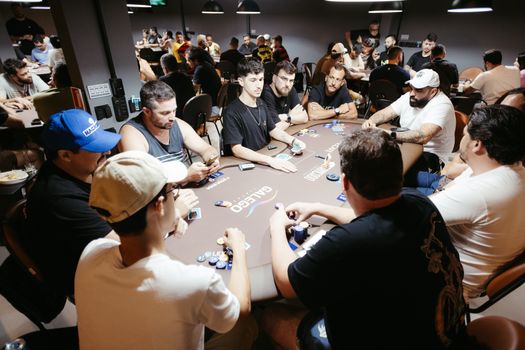
Poker goes even further. Here, not only must players calculate odds, but they must also read opponents, manage bluffing, and control emotions. The World Series of Poker Main Event, for example, consistently features returning champions, a testament to the impact of skill and long-term strategic mastery over short-term luck.
Contrast this with a game like roulette. No decision a player makes can influence the outcome of the spin. Betting systems like the Martingale may alter betting patterns but do not alter the underlying probabilities.
Randomness, Risk, and Psychological Factors
Even in games where strategy plays a role, randomness is never fully eliminated. The “luck factor” can sway outcomes, especially over short timeframes. This unpredictability is what makes casino games thrilling but also dangerous for those who misjudge the role of skill.
Risk management becomes crucial, particularly in skill-based games. Professional players often use techniques such as bankroll management, setting win/loss limits, and employing psychological self-control to mitigate the impact of variance (the swings of luck).
Psychological studies reveal that humans are prone to cognitive biases in casino settings. The “gambler’s fallacy”—believing a roulette wheel is “due” for red after several blacks—leads to poor decisions in games of chance. On the other hand, overconfidence in skill can result in reckless play in games where luck dominates.
Long-Term vs. Short-Term Outcomes: The Law of Large Numbers
One of the most misunderstood aspects of casino gaming is the difference between short-term variance and long-term expectation. The law of large numbers states that as the number of trials increases, actual results will converge towards the expected average.
For example, a player may win big at slots in a single session, but over thousands of spins, the returns will trend towards the programmed payout percentage—typically around 92% to 97%. In blackjack, consistent use of basic strategy will, over hundreds of hours, yield losses at a slow, predictable rate due to the house edge.
Skilled poker players rely on this principle, knowing that while they may lose individual hands or sessions, a strategic edge will generate profit over the long run. This is why professional poker players track their results over tens of thousands of hands.
Case Studies: Real-World Impacts of Strategy
To illuminate the real-world effects of strategy, consider two famous cases:
1. The MIT Blackjack Team: Using card counting and team play, this group of students reportedly won over $10 million from casinos in the 1990s. Their success was rooted in rigorous application of mathematical strategy, exploiting a small but significant edge over the house. 2. Chris Moneymaker’s 2003 WSOP Win: An amateur who qualified for the World Series of Poker Main Event through an online satellite, Moneymaker’s victory demonstrated the power of strategic play and psychological acumen. His win triggered the so-called “poker boom” by proving that skill could overcome the odds in a high-variance environment.However, such successes are rare and require discipline, practice, and an understanding of both the mathematical and human elements at play.
The Balance of Strategy and Outcome in the Modern Casino
Modern casinos are carefully designed to balance entertainment, excitement, and profitability. They offer a mix of games catering to every type of player—from those who relish pure luck to those seeking a battleground for strategic mastery.
Online casinos have further shifted the landscape by introducing live dealer games, tournaments, and AI-powered analytics that track player behavior. Players now have access to an abundance of information, strategy guides, and statistical tools. Yet, the house always retains an edge, ensuring the long-term sustainability of the industry.
According to Statista, global casino revenues surpassed $231 billion in 2022, a testament to the enduring appeal of this interplay between skill, chance, and human psychology.
Understanding the Interplay: What Every Casino Player Should Know
Ultimately, the interplay of strategy and outcome in casino games is a fascinating balance. Here are key takeaways for anyone entering the world of casino gaming:
- Know the Game: Understand whether the game is primarily skill-based or chance-driven. - Apply Strategy Where Possible: Use proven strategies in games like blackjack and poker to improve long-term results. - Accept Randomness: Recognize that luck dominates in many popular games, and even the best strategy cannot guarantee short-term success. - Manage Risk: Set budgets, track results, and play within your means to avoid the pitfalls of variance. - Enjoy the Experience: Casinos are designed for entertainment. Approach gaming as a form of fun, not as a reliable way to make money.By appreciating both the strategic and random elements, players can enjoy a richer, more informed casino experience—one that balances the thrill of unpredictability with the satisfaction of smart play.