When stepping into the vibrant and often dazzling world of casino gaming, players are not just confronted with a game of chance, but a sophisticated arena where mathematics, psychology, and strategy converge. For those looking to not only enjoy but also succeed in casino games, it's crucial to delve into the anatomy of these games, uncovering the layers of probability, strategy, and calculated risk involved.
Understanding Probability and the House Edge
At the heart of every casino game is the principle of probability, which governs the likelihood of every possible outcome. Whether it's the landing of the roulette ball, the distribution of cards in blackjack, or the roll of dice in craps, understanding these odds is fundamental. Yet, it’s not just about the raw odds; it’s also crucial to comprehend the 'house edge'—the built-in advantage that casinos have on every game offered. Games like blackjack and baccarat typically have a lower house edge, which can be further reduced through strategic play, offering better odds for the player.
.png)
Strategic Mastery in Skill-Based Games
Blackjack
Blackjack stands out as a beacon for strategic players due to its reliance on basic strategy—a robust framework that prescribes the optimal decision (hit, stand, double down, split) for every card combination versus the dealer’s showing card. Mastery of basic strategy can dramatically decrease the house edge, tipping the odds slightly more in the player’s favor.
Poker
Poker, unlike most casino games, pits players against each other rather than the house. Success in poker hinges on a blend of strategy, psychological insight, and an acute sense of timing. Knowledge of game theory, the ability to read opponents, and understanding betting strategies are essential components for becoming a proficient poker player.
Games of Pure Chance
Roulette
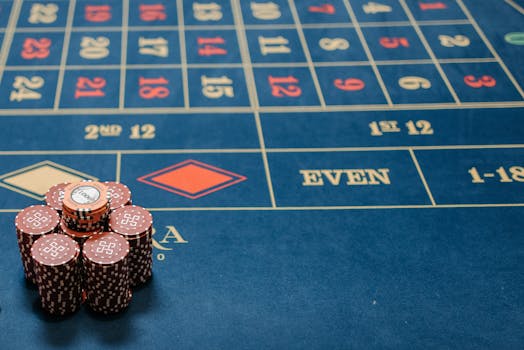
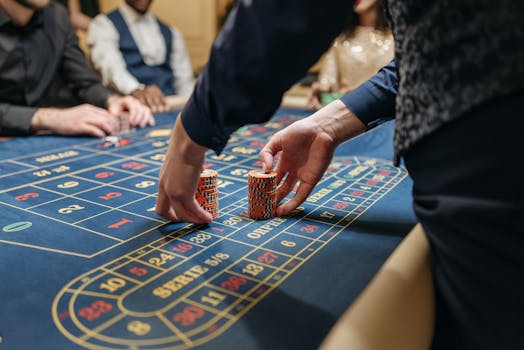
Roulette offers a stark contrast to blackjack and poker as it’s primarily a game of chance. Each spin of the roulette wheel is independent, with fixed odds for each number. Players can opt for bets with higher probabilities but lower payouts, like red or black, or riskier bets like a single number with a payout of 35:1. Understanding these odds and betting strategies can enhance the playing experience, even if the outcomes are entirely governed by chance.
Slots
Slot machines epitomize games of chance in casinos. Governed by random number generators (RNGs), each spin is an independent event with fixed probabilities. While strategic depth may not be profound, players can still make informed choices about which machines to play based on payout percentages and jackpot sizes.
Craps: A Dice Game of Strategy and Luck
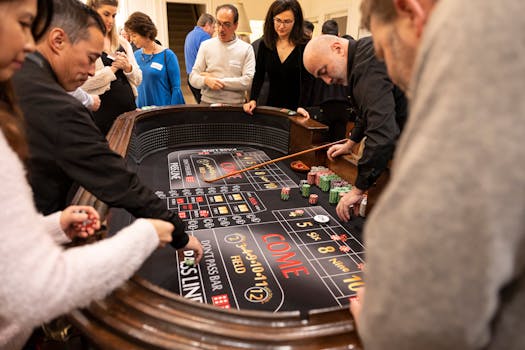
Craps is a unique blend of strategy and luck, offering various bets with vastly different odds. Knowing which bets to place (like pass line and come bets with lower house edges) and which to avoid can significantly affect the game’s outcome.
Bankroll Management: The Keystone of Casino Strategy
Effective bankroll management is crucial, ensuring that players set and adhere to a loss limit and judiciously select games that match their risk tolerance and bankroll size. This approach not only maximizes potential winnings but also enhances overall enjoyment.
The Psychological Dimension
Beyond the numbers and strategies, the psychological aspect of casino games cannot be understated. From managing one's emotions during a high-stakes poker game to understanding the psychological allure of slot machines and their design, players who are aware of these factors can better control their actions and decisions.
Conclusion
The anatomy of a casino game is intricate, woven with threads of probability, strategy, and psychology. Whether you are a seasoned player aiming to refine your strategy or a newcomer eager to understand the nuances of casino games, recognizing and respecting these foundational elements can lead to a more enjoyable and potentially lucrative experience. Remember, the ultimate goal is to enjoy the entertainment aspect of casino gaming responsibly.