Casinos have long been synonymous with glamour, risk, and the tantalizing possibility of fortune. Yet beneath the surface of spinning wheels and flashing lights lies a world governed by probability, psychology, and shrewd decision-making. Players who wish to maximize their chances of success must look beyond mere luck and embrace the subtle, intricate art of strategic play. This article delves deep into the nuances that separate casual participants from true strategists in casino environments, exploring approaches that go beyond basic tactics and into the realms of advanced planning, situational awareness, and adaptive play.
The Science Behind Strategic Play: Probability, Variance, and the House Edge
At the core of every casino game is a carefully calibrated mathematical framework. Understanding this framework is essential for anyone seeking strategic advantage. Three crucial concepts underpin nearly all casino strategies: probability, variance, and the house edge.
Probability defines the likelihood of any given outcome, such as drawing a specific card or landing on a certain roulette number. For example, the probability of drawing an Ace from a standard 52-card deck is approximately 7.7%. Variance, on the other hand, measures how much actual outcomes will fluctuate around the expected average — a key factor in games like slots and baccarat, where streaks of wins or losses can be long.
.png)
Perhaps most important is the house edge, a statistical advantage built into every game. This edge ensures that, over time, the casino always comes out ahead. For example, American roulette has a house edge of 5.26%, while blackjack (with optimal play) can be as low as 0.5%. Recognizing these numbers empowers players to make informed choices about which games to play and how to manage their bankroll.
Game Selection: Matching Strategy to Game Dynamics
Strategic play isn’t just about choosing the right move; it starts with selecting the right game. Each casino game offers a unique blend of skill and chance, and aligning your strategy with the game’s dynamics is a hallmark of advanced play.
Table games like blackjack and poker offer significant opportunities for skillful intervention. In blackjack, for example, basic strategy can reduce the house edge to under 1%, and card counting — though controversial and often banned — can even tilt the odds in a player’s favor. Poker is unique among casino games in that it pits players against each other, making psychological acumen and experience just as important as mathematical skill.
Conversely, games like slots and roulette are largely governed by chance. While there are betting systems for these games, such as the Martingale or Paroli, no strategy can alter the underlying probabilities. Still, players can select machines or tables with more favorable odds or lower house edges.
The table below compares the strategic depth and house edge of some popular casino games:
| Game | Skill Involvement | Typical House Edge | Strategic Opportunities |
|---|---|---|---|
| Blackjack | High | 0.5% (optimal play) | Card counting, basic strategy |
| Poker | Very High | Varies (player vs player) | Bluffing, reading opponents |
| Roulette | Low | 2.7% (European), 5.26% (American) | Betting systems, wheel bias detection |
| Slots | Very Low | 2% - 15% | Game selection, bankroll management |
| Baccarat | Low | 1.06% (banker bet) | Bet selection, streak tracking |
Adapting Strategies in Real Time: Reading the Table and the Players
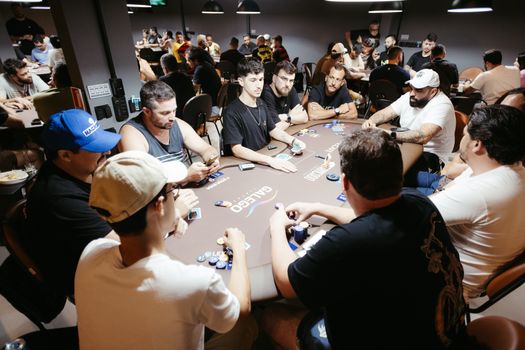
The most successful casino strategists are those who can adapt to changing circumstances. In games involving other players, such as poker or baccarat, situational awareness and behavioral observation become invaluable.
In live poker, for example, reading opponents’ betting patterns, body language, and even their reactions to the cards can provide critical clues. A 2022 survey by the World Series of Poker found that 68% of professional-level players attributed part of their success to their ability to read opponents and adapt strategies mid-game.
Even in games that seem purely mathematical, such as blackjack, skilled players pay attention to the flow of the cards and adjust their bets accordingly. For instance, when a deck is rich in high cards, the odds shift in favor of the player, prompting larger bets.
Adaptive play also involves recognizing when to walk away. Chasing losses is a common pitfall, with studies showing that up to 30% of regular casino players have engaged in this risky behavior at least once. Setting limits and knowing when to stop are as much a part of strategy as any betting system.
Bankroll Management: The Foundation of Sustainable Play
One of the most overlooked aspects of strategic play is bankroll management — the disciplined allocation and preservation of gambling funds. Even the best strategy can be undone by poor money management.
Experts recommend several practical rules for bankroll management: - Set a budget for each session and stick to it. - Divide your bankroll into smaller units (e.g., no more than 5% of your bankroll on a single bet). - Adjust your bet size based on the volatility of the game. - Use “stop-loss” and “win-limit” strategies to know when to leave the table.A 2021 study by the UK Gambling Commission revealed that players who practiced strict bankroll management were 47% less likely to experience significant gambling losses over a six-month period.
Moreover, bankroll management helps reduce the emotional highs and lows that can lead to impulsive decisions. Successful players treat their gambling funds as an investment, making rational choices based on risk and reward rather than emotion.
The Role of Technology: Data, Simulations, and Online Play
The digital revolution has brought unprecedented tools to the fingertips of casino strategists. Online casinos, mobile apps, and advanced simulation software allow players to practice, analyze, and refine their strategies without risking real money.
For example, poker solvers and blackjack trainers can simulate thousands of hands per hour, providing immediate feedback on decision-making. Data analysis tools can help players track their results, identify leaks in their game, and optimize play for maximum efficiency.
Online casinos also offer access to a wider variety of games and rule sets. Savvy players can shop around for games with the most favorable odds or promotional offers, such as lower house edges or cashback bonuses.
Furthermore, the rise of live dealer games online has blurred the line between brick-and-mortar and virtual play, allowing players to apply observation and adaptation skills in real time, just as they would in a physical casino.
Ethical and Psychological Considerations in Strategic Casino Play
Strategic play is not only about maximizing profit; it’s also about maintaining ethical standards and psychological health. The temptation to “beat the system” can lead some players to unethical practices, such as cheating or colluding, which are illegal and can result in severe penalties.
Equally important is the psychological toll of high-stakes strategic play. Gambling addiction affects an estimated 2-3% of the adult population in the United States, according to the National Council on Problem Gambling. Even those who approach gambling with a strategic mindset can fall prey to compulsive behaviors, especially when emotions override rational decision-making.
Responsible gaming initiatives, self-exclusion programs, and support networks are vital resources for players who wish to enjoy strategic play without risking their well-being. Ultimately, the most successful strategists are those who know their limits and play for enjoyment as much as for profit.
Mastering the Art of Strategic Play in Casinos: The Path Forward
Exploring the nuances of strategic play in casinos reveals a world where mathematics, psychology, technology, and discipline intersect. True mastery goes far beyond simple tips or lucky streaks; it requires a holistic approach that embraces probability, adapts to changing circumstances, manages risk, and respects personal limits.
Whether you are a casual player seeking to maximize your enjoyment or an aspiring professional aiming for consistent profits, understanding these subtle elements can make all the difference. In the ever-evolving landscape of casino gaming, those who think critically and play strategically will always have the edge.