Casino gaming is a world of excitement and possibility, where fortunes can change in the blink of an eye. But beneath the glitz and glamour lies a sophisticated interplay of psychology, mathematics, and strategic thinking. For those who wish to do more than rely on luck, understanding the underlying formulas and strategies that drive consistent success is essential. Welcome to "Strategize to Win: The Casino Gaming Formula," where we explore the unique blend of preparation, discipline, and game theory that separates the casual player from the strategic winner.
The Science Behind the Casino Gaming Formula
It’s a common misconception that casino gaming is purely a game of chance. In reality, while luck plays a significant role, science is deeply woven into every aspect of casino operation and game design. Understanding the science behind the formula is the first step in crafting a winning strategy.
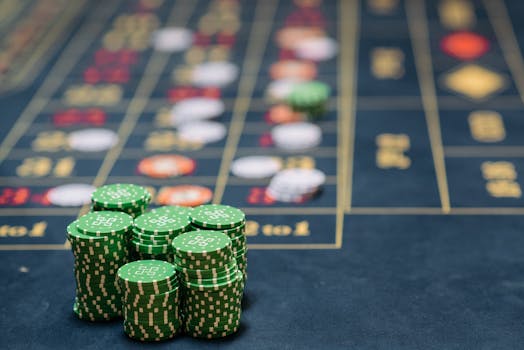
Every casino game has a statistical edge, known as the "house edge." For example, European roulette has a house edge of 2.7%, while American roulette increases this to 5.26% due to the extra double-zero pocket. Slot machines often carry a house edge ranging from 5% to 12%, depending on the machine and payout structure. These numbers demonstrate that the casino is mathematically favored over the long run.
.png)
But players can leverage an understanding of probability, variance, and expected value (EV) to shift the odds, even if only slightly. Card counters in blackjack, for instance, exploit deck composition to gain a temporary advantage, reducing the house edge to nearly zero or even turning it in their favor. Mathematician Edward O. Thorp famously used this principle in the 1960s to beat Las Vegas casinos, proving that a scientific approach can lead to tangible results.
Mental Mastery: Psychological Tools for Strategic Gaming
A crucial but often overlooked aspect of the casino gaming formula is the psychological state of the player. Casinos are meticulously designed to create an immersive environment: bright lights, captivating sounds, and a constant buzz of excitement serve to keep players engaged and spending.
To strategize to win, players must master the psychological aspects of gaming:
1. $1: Studies show that players who set strict limits on time and money have a 23% lower risk of problem gambling. 2. $1: Emotional swings can lead to poor decisions. In a survey by the National Council on Problem Gambling, 31% of respondents admitted to "chasing losses," often resulting in greater financial harm. 3. $1: The "gambler’s fallacy" — the belief that past outcomes influence future results in random games — leads to irrational betting. Recognizing and counteracting such biases is key to strategic play.Professional poker players often credit their success to mental fortitude as much as technical skill. Developing a calm, focused mindset is just as important as understanding the odds.
Game Selection: Choosing Battles Wisely
Not all casino games are created equal. Strategic players know that the choice of game can have a significant impact on the likelihood of success. Here’s a comparative overview of common casino games, their typical house edges, and skill involvement:
| Casino Game | Typical House Edge | Skill Involvement | Potential for Strategy |
|---|---|---|---|
| Blackjack | 0.5% (with basic strategy) | High | High |
| Poker (Texas Hold’em) | 0% (player vs. player) | Very High | Very High |
| Roulette (European) | 2.7% | Low | Low |
| Baccarat | 1.06% (banker bet) | Low | Low |
| Slot Machines | 5-12% | None | Very Low |
Choosing games with a lower house edge and higher skill factor increases the player’s leverage. For example, blackjack and poker reward disciplined, informed play, while slot machines offer little room for strategy.
Money Management: The Foundation of Winning Formulas
Money management remains the bedrock of the casino gaming formula. Even the most skilled players can fall victim to poor bankroll control. Here are three key principles:
1. $1: Allocate a specific amount of money for play, and never exceed this limit. Professional gamblers often divide their bankroll into units, risking only a small percentage (1-5%) on any single bet. 2. $1: Set predetermined goals for both profits and losses. According to the American Gaming Association, players who use stop-loss limits are 37% more likely to leave the casino ahead. 3. $1: Adjusting bet sizes in proportion to the bankroll (e.g., the Kelly Criterion) can optimize returns and reduce the risk of ruin. In blackjack, for example, proper bet sizing based on count can increase long-term profits by up to 15%.A disciplined approach to money management transforms short-term variance into long-term sustainability.
Advanced Strategies: Combining Math and Tactics
For those ready to move beyond the basics, advanced strategies can further refine the casino gaming formula. These include:
- $1: While not illegal, casinos frown upon this practice. Card counters track high and low cards to adjust bets and playing decisions. With perfect execution, the house edge can shift to the player’s favor (up to +1%). - $1: Systems like the Martingale (doubling bets after losses) are popular but risky. More sophisticated approaches, such as the Labouchere or Paroli systems, aim to balance risk and reward, but all systems must be paired with strict limits and discipline. - $1: In poker, GTO strategies involve balancing bluffs and value bets to make oneself unexploitable. The rise of computer solvers has allowed top players to study millions of hand scenarios; the world’s best now use GTO as the backbone of their success.It’s important to remember that while advanced strategies can increase your edge, they require study, practice, and constant self-assessment. Even small errors can erase the advantage gained.
The Role of Technology in Modern Casino Strategies
The digital era has transformed casino gaming, offering new tools and opportunities for strategic players. Mobile apps and training software can simulate thousands of hands, providing instant feedback and analysis. Online casinos also offer detailed game histories, allowing players to review their decisions and spot patterns.
Furthermore, the rise of big data and artificial intelligence (AI) in casino operations means that players must adapt. Casinos use AI to spot advantage play, track betting patterns, and personalize promotions. Players who understand and leverage technology – such as tracking apps for poker statistics or simulation software for blackjack – can stay one step ahead.
In 2023, the global online gambling market reached an estimated $92.9 billion, with technology-driven games representing 70% of player engagement (Statista). This underscores the importance of staying current with digital trends to maximize your strategic edge.
Winning Mindset: Beyond the Casino Floor
Ultimately, the most successful casino players view gaming as a discipline, not a quest for instant riches. They invest time in learning, practice patience, and embrace both wins and losses as part of the process. The winning formula isn’t about beating the casino every time; it’s about making smart decisions, minimizing losses, and capitalizing on opportunities when they arise.
Consider the story of Don Johnson, who won over $15 million from Atlantic City casinos in 2011. Rather than relying on luck, Johnson negotiated special rules, applied rigorous math, and exercised flawless discipline — highlighting that the "formula" is a blend of preparation, negotiation, and execution.
Key Takeaways on the Casino Gaming Formula
The path to casino success is paved with more than luck. The casino gaming formula is a strategic blend of mathematics, psychology, game selection, disciplined money management, and the thoughtful use of technology. While the house always retains an edge, players willing to invest in knowledge and self-control can maximize their chances and enjoy a more rewarding experience.
By embracing this holistic approach, every trip to the casino becomes an opportunity not just to win, but to improve, learn, and master the art of strategic gaming.