Making the Odds Work for You: Probability in Casino Strategy
The glittering world of casinos is built on an invisible foundation: probability. Every spin of the roulette wheel, turn of a card, or roll of the dice is governed by mathematical odds, not mere luck. If you’ve ever wondered why the house always seems to win, or how some players consistently walk away with winnings, the answer often lies in understanding and applying probability. This article will dive deep into how probability shapes every casino game, how you can leverage it to your advantage, and why making the odds work for you is essential for a smarter, more strategic approach to gambling.
The Mathematics of Chance: Understanding Casino Probability
Before stepping onto a casino floor or logging into an online platform, it’s vital to grasp the basic concept of probability. Probability is a measure of how likely an event is to occur, expressed as a number between 0 (impossible) and 1 (certain). In casino terms, it’s the likelihood that your chosen outcome—such as picking the winning number in roulette or drawing a blackjack—will happen.
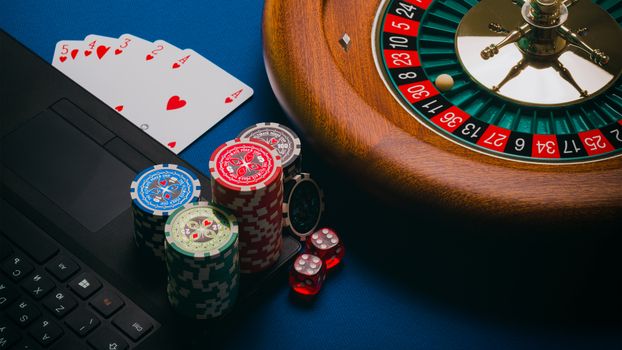
For example, in a standard roulette game with 38 slots (numbers 1-36, 0, and 00), the probability of the ball landing on any single number is 1 in 38, or about 2.63%. This low probability is why the payout for a single-number bet is 35 to 1. However, the real payout should be 37 to 1 if there were no house edge.
.png)
Casinos design their games so that the expected value—a mathematical concept that calculates the average outcome over time—always favors the house. In blackjack, the house edge is typically around 0.5% if you play perfect basic strategy, while in slot machines it can range from 2% to 15% depending on the machine and jurisdiction.
House Edge vs. Player Odds: The Battle Behind Every Bet
The house edge is the casino’s built-in statistical advantage over players, calculated as the average percentage of each bet the casino expects to keep over the long run. Understanding house edge is crucial for any player who wants to make probability work in their favor.
Let’s look at some popular casino games and their typical house edges:
| Game | House Edge (%) | Probability of Player Win (per bet) |
|---|---|---|
| Blackjack (basic strategy) | 0.5 | 42.22% |
| European Roulette | 2.7 | 2.70% (single number bet) |
| American Roulette | 5.26 | 2.63% (single number bet) |
| Craps (Pass Line bet) | 1.41 | 49.29% |
| Slots | 2-15 | Varies by machine |
As shown, the lower the house edge, the greater your chances of winning in the long run. Blackjack and craps, when played with optimal strategies, provide some of the best odds for players.
Probability in Action: How Professional Players Use the Numbers
Savvy gamblers don’t rely on superstition or “gut feelings”—they use probability to inform every decision. Here’s how:
1. $1: By keeping track of which cards have been dealt, skilled players estimate the probability of certain cards appearing. This allows them to adjust their bets and strategies, effectively shifting the odds slightly in their favor. While card counting is not illegal, casinos frown upon it and may ban players who are caught. 2. $1: Knowing that a single number bet in American roulette has a 2.63% chance of winning, but a red/black bet has a 47.37% chance, players can tailor their bets according to risk tolerance and bankroll. Professional players often prefer even-money bets for longer, less volatile play. 3. $1: Probability tells us that variance (the natural swings of luck) can wipe out a bankroll quickly, even in low house edge games. Professional players use probability models to determine how much to wager on each bet to minimize the risk of ruin and maximize the longevity of their play. 4. $1: Unlike most casino games, poker pits players against each other, not the house. Here, calculating “pot odds” (the ratio of the current size of the pot to the cost of a contemplated call) and comparing them to the probability of completing a winning hand is a fundamental skill. For example, drawing to a flush after the flop gives you about a 34.97% chance of completing it by the river (9 outs over 47 unseen cards).The Gambler’s Fallacy and Other Probability Pitfalls
While probability is a powerful tool, it’s easy to misapply. One of the most common misunderstandings in casinos is the “gambler’s fallacy”—the mistaken belief that past events affect future outcomes in independent games. For instance, if a roulette wheel lands on black five times in a row, many believe red is “due.” In reality, the probability for red or black remains unchanged on each spin: about 47.37% per spin in American roulette.
Other probability pitfalls include:
- $1: Believing a winning streak will continue despite each event being independent. - $1: Players might overbet on jackpot slots or lottery-style games, misjudging the true probability of a win (often 1 in millions). - $1: Failing to recognize that probability doesn’t guarantee even outcomes in the short run can lead to dangerous betting patterns.Understanding these pitfalls is key to making rational, probability-based decisions rather than emotional ones.
Game Selection: Where Probability Guides Your Choices
One of the smartest ways to make the odds work for you is simply choosing the right games. Not all casino games are created equal in terms of probability and house edge. Let’s look at how probability can help guide game selection:
- $1: As previously mentioned, the house edge can be as low as 0.5% with basic strategy. This makes it one of the best options for players who enjoy using skill and probability to their advantage. - $1: The Pass Line and Come bets offer a low house edge (1.41%). Avoiding high-house-edge bets like Any Seven (16.67%) can dramatically improve your odds. - $1: Betting on the banker has a house edge of 1.06%, making it a great choice for probability-minded players. - $1: While fun and flashy, slots often have the highest house edges and the lowest probability of winning any substantial payout. Look for machines with published Return to Player (RTP) rates above 96% for better odds.By choosing games with lower house edges and understanding the probabilities involved, you can play smarter and extend your bankroll.
Harnessing Randomness: Strategies to Tilt Probability in Your Favor
While it’s impossible to overcome the house edge in the long term without cheating, you can use probability to minimize your losses and maximize your enjoyment.
- $1: Many games have mathematically proven strategies that reduce the house edge. Learn and apply these strategies for games like blackjack, baccarat, and video poker. - $1: Bets with high house edges—such as insurance in blackjack (house edge up to 7.5%), the five-number bet in American roulette (7.89%), or tie bets in baccarat (14.36%)—should be avoided if you want probability on your side. - $1: Probability tells us that streaks, both good and bad, are inevitable. Set limits to lock in wins and protect against devastating losses. - $1: The larger your bankroll relative to your average bet, the more likely you are to outlast negative swings and capitalize on positive ones.Conclusion: Make Probability Your Casino Companion
The world of casino gaming is dazzling, but beneath the surface, it’s a game of numbers. Understanding probability—and how casinos use it—empowers you to make smarter decisions, avoid common traps, and stretch your entertainment dollar further. While you can’t change the odds, you can change how you play. By selecting the right games, using optimal strategies, and thinking mathematically, you make the odds work for you, not against you. The next time you step into a casino, remember: it’s not just about luck. It’s about making probability your most valuable asset.